
How to Bring HLA Testing In-House
A practical route for rheumatology-focused laboratories and clinics that want to reduce dependence on send-out testing and run key HLA markers in-house.

Why laboratories bring HLA testing in-house
Many laboratories and clinics still rely on send-out testing for HLA markers relevant to rheumatology. This often results in longer turnaround times, less control, and limited flexibility when additional markers are needed.
Hola Biolabs helps sites bring HLA testing in-house with lyophilized PCR kits and flexible implementation options tailored to their current set-up, volume, and molecular experience.

What changes when HLA testing moves in-house
Less dependence on send-out testing
Keep HLA markers closer to the clinic and reduce reliance on external labs.
Shorter turnaround time
Get results faster and support earlier clinical decision-making.
A route to broader HLA testing
Move beyond a single marker and expand your in-house HLA portfolio over time.
Improved economics
Bringing testing in-house can deliver a strong return on investment - often within months, depending on volume.
Choose the Set-Up That Fits Your Laboratory
There is more than one way to bring HLA testing in-house. The best option depends on your current PCR capability, expected sample volume, and desired level of automation.
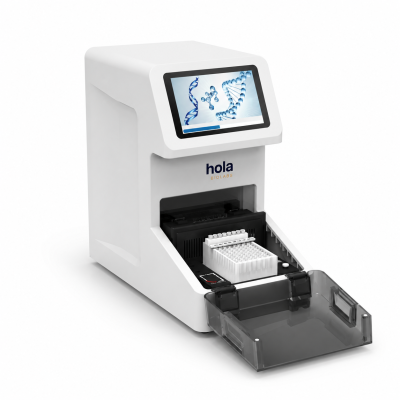
MDX08 Sample-to-Result PCR System
The MDX08 is a compact system with an estimated capacity of up to 12,500 tests per year.
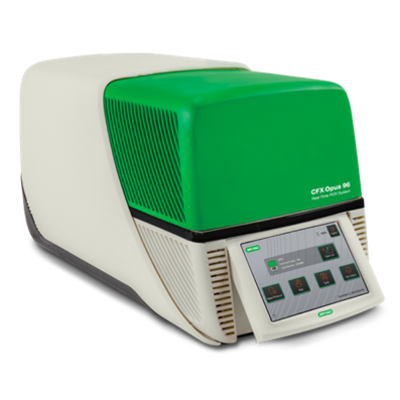
Open qPCR set-up
Use our lyophilized HLA kits on your current open qPCR platforms. This is a practical route for labs that want to add HLA testing without a dedicated automated system.

MDX01 Point-of-Care PCR System
A single-sample system that allows combining multiple markers in one run. Ideal when sample numbers are low but clinical need is high.
Available HLA PCR kits for in-house testing
The following HLA PCR kits are available for in-house testing using open qPCR platforms or the MDX08 fully automated system:
 HLA-DR4 PCR Kit
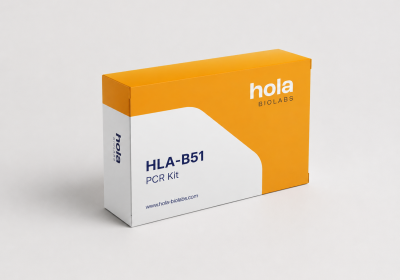 HLA-B51 PCR Kit
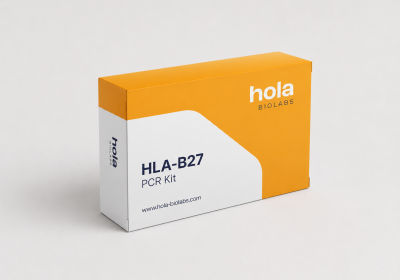 HLA-B27 PCR Kit
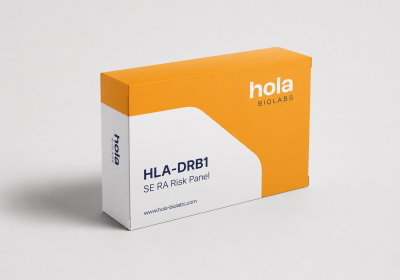 HLA-DRB1 Shared Epitope RA Risk Panel
 HLA-B*58:01 PCR Kit
What happened when HLA testing moved in-house
A National Centre for Rheumatic Diseases in Nepal introduced in-house HLA testing after relying on external testing, despite having no prior PCR experience.
Before implementation
- Dependent on send-out testing
- Long turnaround times
- Only 1 marker available
After implementation
- In-house HLA testing
- Fast turnaround times
- Multiple markers available
| Metric | Before | After |
|---|---|---|
| Average HLA PCR daily volume | 6 tests/day | 24 tests/day |
| Turnaround time (order » report), median | 120 hours | 31.6 hours |
| Number of HLA tests offered | 1 | 3 |
| Hands-on time (per sample) | — | 90 seconds |
| Invalid rate (first pass) | — | 2.72% |
| Molecular HLA testing revenue increase | — | 59% |
| Break-even threshold | — | 2.91 tests/day |
| Return on investment | — | 3 months |
Why the Nepal example matters for similar laboratories
This implementation shows that bringing HLA testing in-house is realistic even for sites with limited molecular experience. It demonstrates clear gains in speed, control, flexibility, and economics - all while keeping day-to-day operation practical.
For many rheumatology labs and clinics, this opens a practical path to faster results, greater independence, and long-term portfolio expansion.
Interested in bringing HLA testing in-house?
Let's discuss your current testing model, target markers, and which set-up makes the most sense for your laboratory.
Request information